
That’s us for the term!
Thank you so much for giving us the chance to share some science and wonder with your future scientists. We have loved teaching them and can’t wait to do it again soon.
Until then, Merry Christmas and Happy New Year!
If January is too long to go without some science and wonder, join our Winter Camp by clicking here.

SCIENCE BEHIND THE WAND
Even in winter, Glacius, the freezing spell, would be really handy in Dubai, but plain old refrigeration has already worked wonders in cooling the desert. While spraying compressed air cans that cooled in our hands, we learnt how pressured refrigerants are used to chill everything from rooms to food. But it was the freezing air that came out the other end that let us cheat the laws of thermodynamics and make things really cold! By rapidly expanding pressurised gas, we made clouds in bottles and even froze carbon dioxide. At -80 degrees, this dry ice was perfect for creating enough billowing, magical fog to celebrate our graduation from the wizarding world of science.

MYTH BUSTERS
With so many myths and so little time, we end the term with a bunch of myths you don’t need a lab to debunk. Can you fold paper in half more than seven times? You sure can! Just ask Britney Gallivan, the high-schooler who not only worked out the formula for this but also holds the world record for most paper folds. Does air moving around a wing really want to reach the end at the same time? Nope. And, as our paper planes showed, there’s a lot more to flight than just Bernoulli’s principle. Does water drain clockwise in the Northern hemisphere? While there may be a tendency for this, you can easily overcome the Coriolis Effect and make water drain whichever way you like, as we did in our tornado bottles. Is the Earth round? Yes!!! Just ask Eratosthenes, who used nothing but a shadow to prove this more than 2000 years ago!
PERIODIC PIONEERS
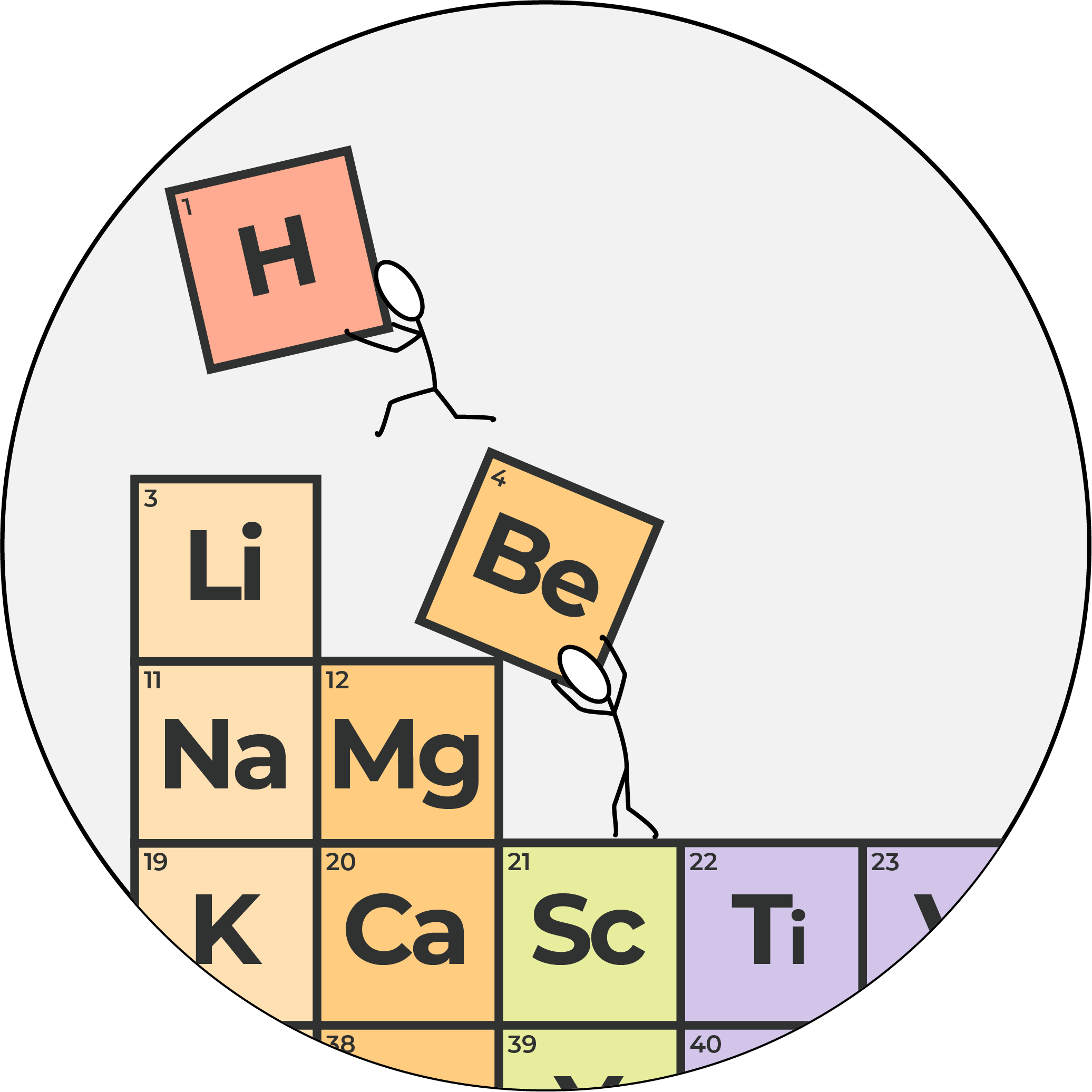
Unlike most of the elements we have met this term, the larger, heavier ones at the tail end of the Periodic Table are ones you wouldn’t want to see up close. At least not without a few inches of lead in the way. With such large nuclei, their atoms are prone to radioactive decay, breaking down into smaller elements and a whole bunch of DNA-damaging energy and particles. Since even Googling where we could find some of these elements would put us on some watchlist somewhere, we recreated their toxic glow by shining UV light on our fluorescein potions, before breaking down luminol with some bleach to end the term basking in its ethereal light.