
We’ve got discounts expiring soon!
Early-bird for our Winter Camp expires on the 1st of December.
Book here using the code WC10 to get an additional 10% off the week!
And the preorder window for our Christmas Science Kit closes on the 1st as well.
Preorder yours here and get the Kit at a special discounted price!
Don’t miss out on this chance to save.

SCIENCE BEHIND THE WAND
While the wizarding world need only utter “Ventus” to blow great, big gusts, we muggles need to rely on ungainly fans to push air around. But Bernoulli’s principle gives a way to get so much more out of our fans. After using the power of pressure differentials to defy gravity and stop an upturned cup of water from pouring onto the floor, we will explore the relationship between air’s speed and pressure. Using fast-moving air to reduce pressure, we will get the surrounding atmosphere to give us a helping hand. Balls will be sucked right out of cups and will float midair. Water (and the toilet paper to soak it up) will be sent flying across the lab. And giant bags and entire rooms will be filled up with just a single puff of air!

MYTH BUSTERS
Does lightning never strike the same place twice? To find out, we will go deep into the world of static electricity. Using simple friction, we will dislodge electrons from everyday objects and induce charges that will make balloons attract and repel, and paper rise up and dance. But is the static behind these simple experiments also responsible for one of nature’s most magnificent sights? Our Van de Graaff generator will answer that by supercharging the charges involved, allowing us to rain down tiny lightning bolts without a storm cloud in sight. Our plasma ball will let us get up close and personal and see what happens to the air in a strike, but it’s the fierce arcs of the Wimshurst machine that will finally settle this myth!
PERIODIC PIONEERS
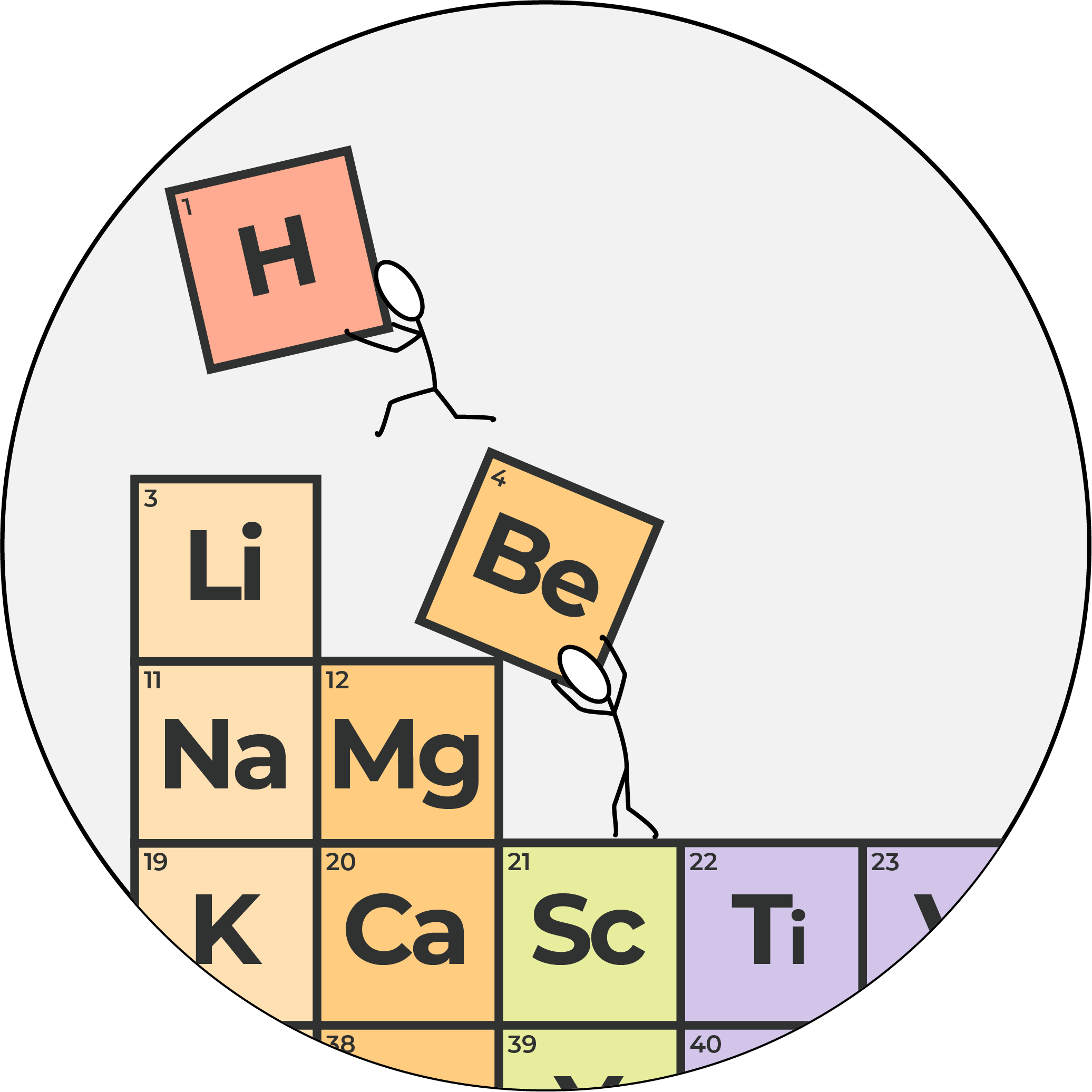
The post-transition metals are definitely metals, but to a lesser extent. Not only are they softer and more brittle than your typical transition metal, but they also melt at much lower temperatures, making them easier to work with. Using a blowtorch, we will melt aluminium. Using a soldering iron, we will melt tin. And using nothing but our body heat, we will melt gallium! Then, it’s time to turn up the power. By passing a current through a solution of tin salt, we will crystallise a delicate metal snowflake right out of the liquid!