Issue 2 | Spring 2026

Thank you for the great response to our first newsletter of the term, as well as our Home Workshops. They are the perfect way to enjoy Curiosity Lab’s unique blend of hands-on science and wonder during these unprecedented times from the safety and comfort of your home.

If you are interested, you can find out more details about these here.

EVERYDAY

MYSTERIES

We continued exploring the mysteries of light and colour by asking, “Why are white things white?” It may seem a simple question, but there is more to it than meets the eye! Take, for example, soap bubbles - even though the soap used is brightly coloured, the bubbles themselves are white. Once again, we discovered that scattering is the keyword here! But, as our experiments with white lab coats and hydrochromic ink revealed, white things tend to get transparent when wet. This led us to explore refraction and bend light so much that we turned glass truly “invisible”. Finally, we warmed up our throwing arms and headed over to our photon-energy level firing range to explore colour and transparency at a subatomic level.
A FANTASTIC

VOYAGE WITHIN

Our voyage through the human body started at our largest organ, the skin. After taking a closer look at our own skin under microscopes, we delved into its main purpose: keeping our insides inside while the germs outside are kept at bay. Using water balloons filled with red dye and pierced cherry tomatoes left to rot, we explored the necessity of skin. Next, we tested another awesome aspect of the skin, its role as a sensory organ. By testing different parts of our bodies, we discovered where we have the greatest sensitivity to touch before soaking our hands in water of varying temperatures to understand how it performs thermoception.
CHEMISTRY IN

PLAIN SIGHT

We are surrounded by light, from the Sun to candles to bulbs, but can we make light using chemistry alone? Fire, a famous oxidation reaction, is exothermic, but can we find a safer, less heat-fuelled solution? The animal kingdom can paint magnificent scenes through bioluminescence. Our scientists, however, achieved the same with some chemiluminescence, the process that adds the glow in glow sticks. By combining luminol - a chemical with a penchant for light - with a dash or a drop of catalyst, we filled our dark lab with ethereal light!
Issue 1 | Spring 2026

Welcome to the first newsletter of the term!

Each week, you will find a short write-up on each Module’s lessons so that you can have some great science chats with your future scientists.

We hope you find it fun, informative, and helpful!

You will also find news about important upcoming events to keep you in the loop on what’s going on at the Lab. Like, the Home Workshops we are now offering!

These are the perfect way to enjoy Curiosity Lab’s unique blend of hands-on science and wonder during these unprecedented times from the safety and comfort of your home.

We are also offering Online Workshops covering topics in line with school curricula, packed with our trademark jaw-dropping demos and exciting experiments the kids can safely do at home.

Get in touch to find out more about these latest offerings.

EVERYDAY

MYSTERIES

The everyday mysteries begin to unfold with the most frequently asked science questions: Why is the sky blue? And, while we are at it, how are rainbows made? After using special glasses to split white light and reveal the spectrum of colours within it, we fired lasers to explore how spherical raindrops do the exact same thing with sunlight. Then, by shining white light through water tinted with a splash of milk, we recreated our atmosphere’s scattering of blue light that gives us blue skies. Finally, we turned a CD into a spinning top that not only reveals the rainbows all around us, but also demonstrates the magic of colour mixing.

A FANTASTIC

VOYAGE WITHIN

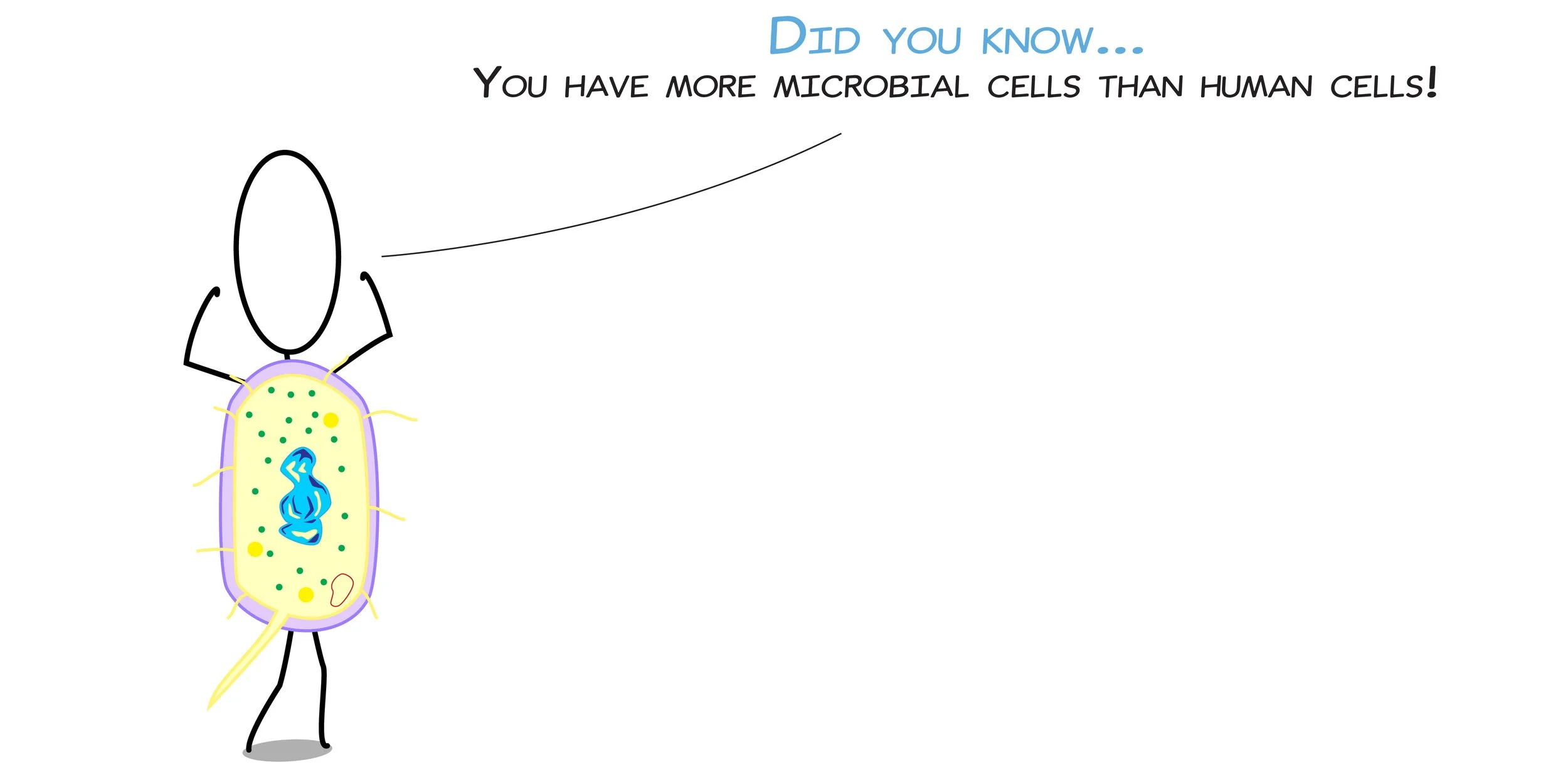
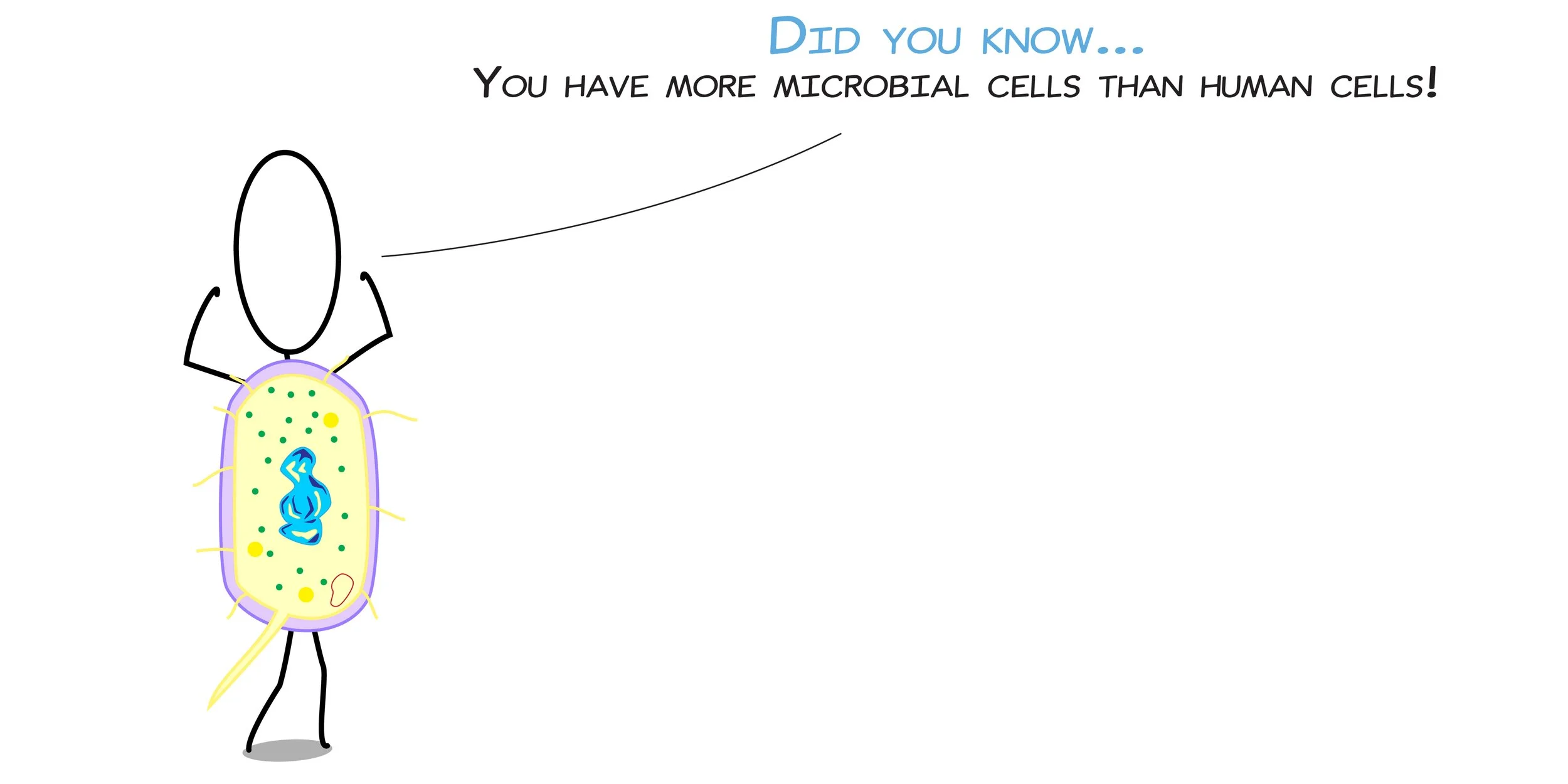
Before we explore how we function, we need to see what we are made of. That’s why our voyage through the human body started at its most basic building block, the cell. It takes around thirty-five trillion cells to make the human body, so delving into their tiny world required the power of microscopy. With the help of different stains and ever higher magnifications, we dove deep into the world of plant and animal cells, before climbing up the hierarchy of our bodies, where cells create tissues and tissues work together to create organs!

CHEMISTRY IN

PLAIN SIGHT

We got off to a glowing start, exploring the world of fluorescence - that otherworldly glow given off by certain chemicals when exposed to UV light. After discovering the fluorescent potential of a whole host of household chemicals, we diluted fluorescein - a key ingredient in highlighters - to create a glow-in-the-dark potion with beautiful, neon-green tendrils. Then, it was time to find fluorescence in the most unexpected place. We blended up a spinach smoothie to extract its chlorophyll and distilled a green liquid that glowed pink!

Home Workshops

Enjoy Curiosity Lab's unique blend of science and wonder from the safety and comfort of your home.

Gather a group of your friends, choose from a selection of workshops packed with our most popular experiments, and set the stage for a visit from our awesome teachers and all their jaw-dropping science.

50 minute workshop | AED 1000 (up to 5 kids)

  • Workshops are suitable for ages 4 to 14

  • Additional children will be charged at AED 150 per child

  • All prices are subject to VAT

For more information and bookings, please get in touch.

Issue 9 | Winter 2026

After all the wondrous science we have had the privilege of sharing with your children this term, that wasn’t quite the end we were expecting. We are sorry so many of our students didn’t get the chance to see how their Modules played out, but it was far more important for all of us to follow the advice of the government and operate with an abundance of caution.

Thanks to the strength of the UAE and its leadership, we remain hopeful that these dark days will pass soon and that we will be able to pick up where we left off and make your children fall deeper in love with science. Until then, stay curious, and importantly, stay safe.

COOKING UP SCIENCE

Of all the culinary arts, baking is the one that most resembles science. Through changes in ratios and technique, baking takes the same key ingredients and transforms them into all those tempting treats on display in bakeries. Last week, we explored the science in baking for ourselves by conducting the tastiest experiment ever: baking chocolate chip cookies! By changing the ratios of things like flour, eggs, sugar, butter and baking powder in our cookie dough, and then comparing it to some perfect control cookies, we discovered what each of these key ingredients brings to the table.

PLANET EARTH, ANIMATED

As far as we know, the universe is a vast, sterile desert in which our planet is the only oasis of life. And even a cursory exploration of the fossil record reveals just how vibrant this oasis has been throughout its history. After getting up close to our fossil collection, filled with specimens from dinosaurs, trilobites, ammonites and marine life, we searched for our very own pieces of the past. Once the dig site was carefully excavated, we assembled the fossils we unearthed and cast souvenirs to remind us of our place in the Earth’s long history.

RAMPANT REACTIONS

Last week, things got electric as we broke down chemicals by passing a current through them. So long as the chemical conducts electricity, we can use electrolysis to decompose it. After exploring charges, ions and electrodes, we discovered what exactly makes a material conduct before we split H20 into its H’s and O’s. After these combustible gases popped and settled, we decided to give steel a makeover. By choosing the right electrodes and electrolytes, we electroplated boring-looking objects with the lustrous shine of copper!

Issue 8 | Winter 2026

Our Spring Camp is filling up, and we only have a handful of Super Early Bird discount codes left. Sign up here with the code SC20 to get an additional 20% off the week!

COOKING UP SCIENCE

For most of our past, the warmer months were times of plentiful harvests, and the colder months were times of scarcity. To spread the calories throughout the year, humans need to find ways to keep the decomposers at bay and extend the shelf life of foods.  This week, we will prepare our pantries for the winter by making a brine to pickle cucumbers. While its acidity and salt deter all microbes, fermentation is less strict. Here, we create the conditions for certain beneficial microbes to proliferate and protect our food for us. Like the yeast we will use to create the very inedible Elephant Toothpaste reaction!

PLANET EARTH, ANIMATED

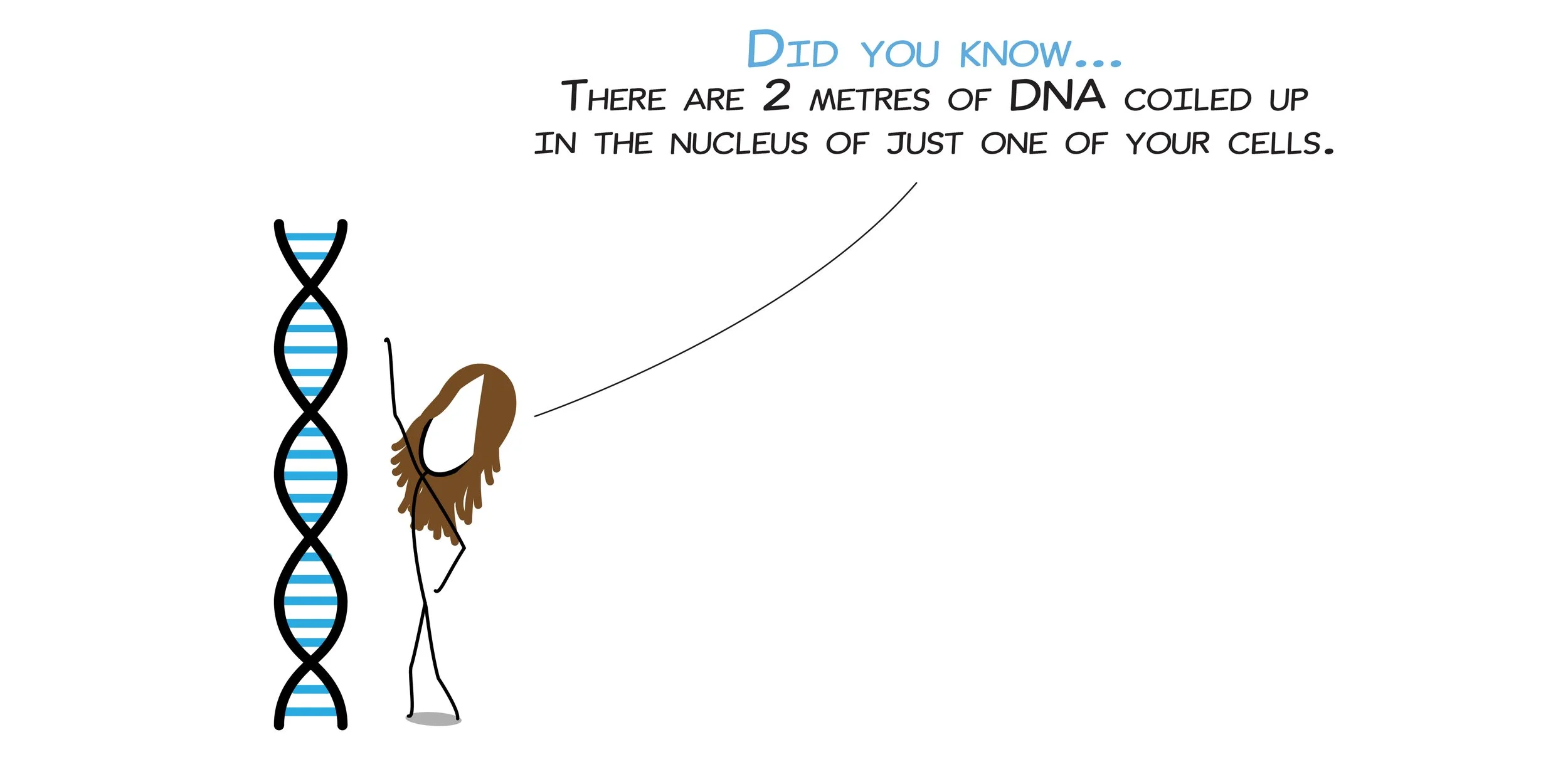
Hidden deep within cells are the instructions that enable an organism to form and function. In simpler lifeforms, this genetic material is “written” in RNA, but we humans have DNA, its double-helical upgrade. This week, we will explore how DNA encodes for genes, copies itself, and passes that information from one generation to the next. And as we do this, we will break down the cells of a strawberry, extract its genetic material, and isolate its DNA for all to see.

RAMPANT REACTIONS

Anyone who has noticed the fading of cherished photos knows that light can decompose. Ironically, this process made photography possible in the first place. By coating paper with a chemical particularly susceptible to light and then hiding it beneath a negative while the Sun’s UV light works its magic, our chemists will create their own old-timey photographs. Waiting for these to develop will give us plenty of time to explore UV’s glow with fluorescent potions, inks and more!

Issue 7 | Winter 2026

We have got some big discounts on offer!

First, our Ramadan Special. We are offering 30% off the remaining weekday afternoon classes during Ramadan! So if you want to make the most of the shorter school hours, come join us during the week and save on some extra science and wonder.

And registration for our Spring Camp is now open with a special offer for our very early birds. The first 20 people to sign up here using the code SC20 will get an additional 20% off the week. Act fast and save big!

COOKING UP SCIENCE

Dairy hasn’t been the only staple of the human diet. Bread has also graced tables around the world for millennia. But whereas most cultures made do with flatbreads, this week, we will be raising it up to the next level with leaveners. As our experiments will show, both baking soda and yeast produce enough gas to blow up balloons, but which of these is best at making a light and fluffy dough? After mixing and kneading our own dough, we will stretch it out, top it with tomato sauce and cheese, bake our pizzas, and put these leaveners to the ultimate taste test.

PLANET EARTH, ANIMATED

Since water is so good at dissolving the chemicals biochemistry depends on, life needed a way to stop the currents from washing these nutrients away. The cell kept these currents away and built up high enough concentrations of these nutrients within it to allow life to take hold. This week, microscopes will let us get a closer look at life’s building blocks. Using onion skin and our own cheek cells, we will explore the differences between plant and animal cells before we turn the microscope to our aquarium to reveal the microscopic universe of single-celled life hiding right under our noses.

RAMPANT REACTIONS

You don’t always have to mix a bunch of chemicals together to get a chemical reaction. Sometimes, all we need to do is add a little energy. With this kick, a single chemical can break down and produce a host of new ones. This week, that kick will come in the form of heat as we thermally decompose chemicals. After breaking down vibrantly turquoise copper carbonate into black copper oxide and carbon dioxide, we will set light to sugar and charm a pure carbon snake out of its flames.

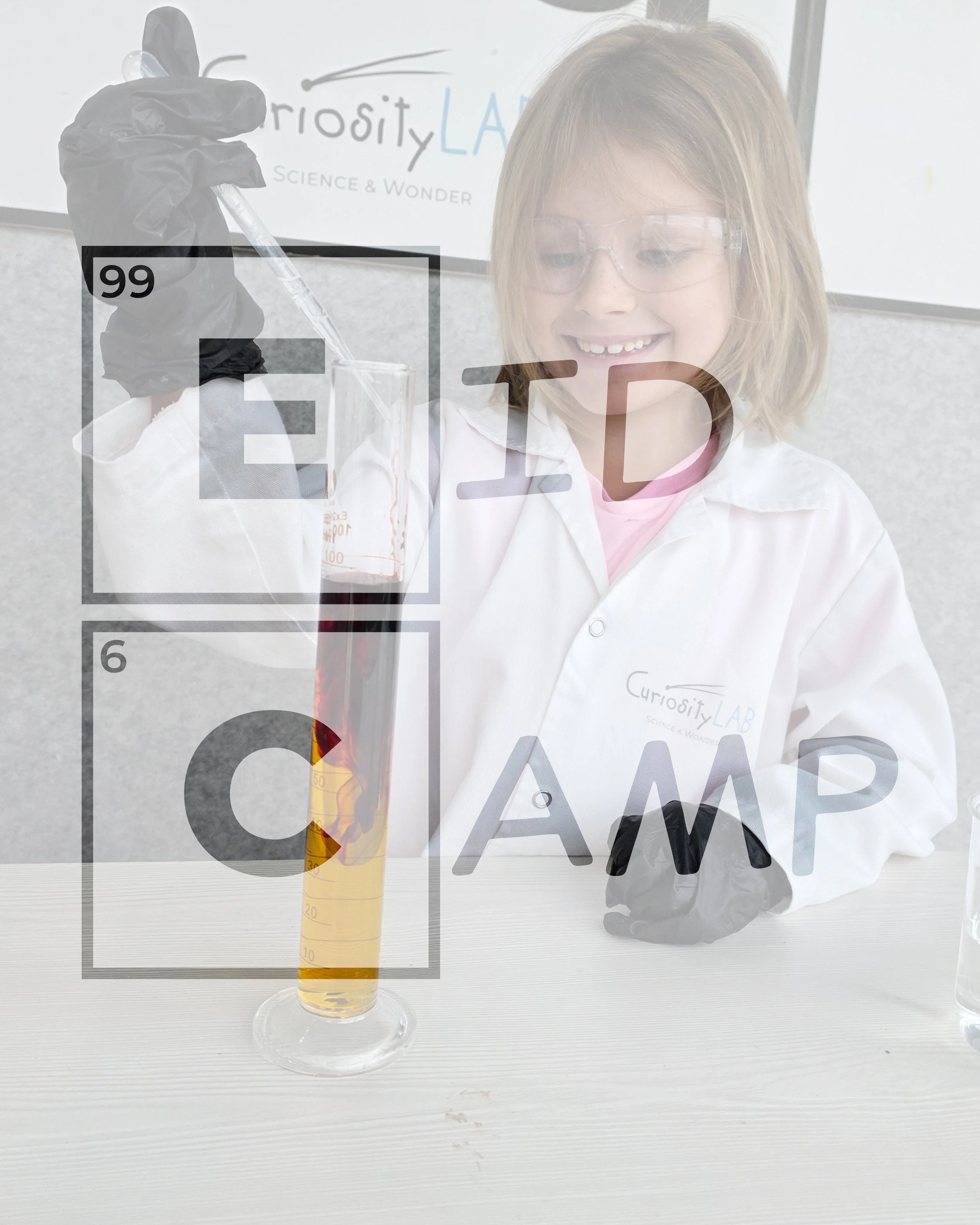
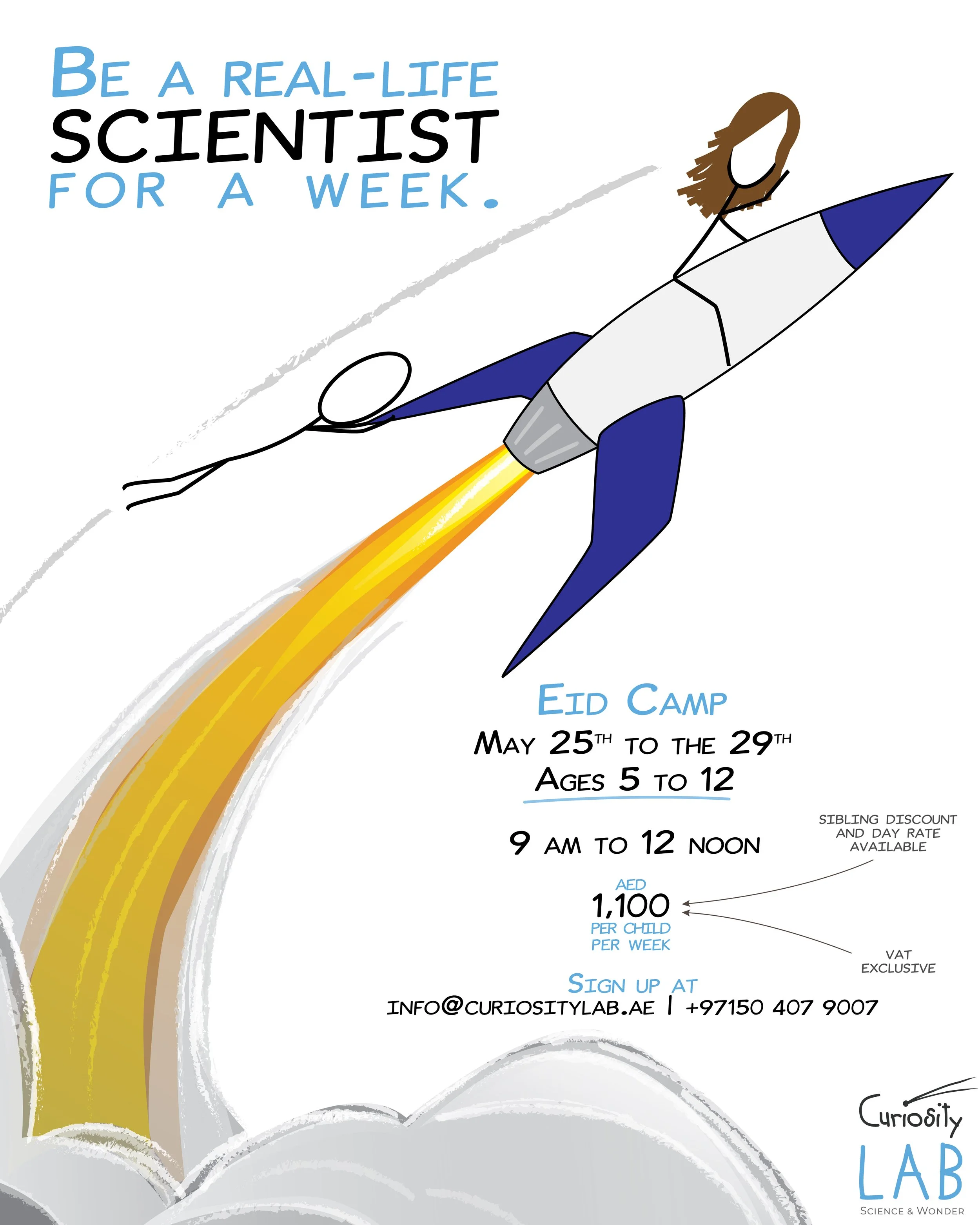
Eid Camp 2026

Question, explore and experiment your way to a science-packed, wonder-filled Eid

Each day, your future scientists will explore a theme that could take them from the microscopic worlds of chemistry and biology, up through the invisible fields of forces and energy, and out to the astronomical realms of planets and stars. Through jaw-dropping demonstrations and mind-blowing experiments, they will get hands-on in a way that will leave them with a thorough, conceptual understanding and a lifelong love for Science.

Kids will be split into similarly-aged groups that will work their way through the day’s activities at a level best suited for their ability. Some will have their curiosity sparked, others will have it nurtured and fuelled, and everyone will have so much fun, they'll never want to leave!

All kids need to bring is a small, healthy, nut-free snack and plenty of curiosity!

Sign up now using the Online Registration Portal below

Please note:

  • All prices are exclusive of VAT

  • Choose “Full Enrollment” if booking for the week and “Casual Enrollment” if booking single days

  • A Sibling Discount of 10% is automatically applied to the total when signing up two or more children for the week.

Issue 6 | Winter 2026

As we get ready to celebrate the holy month of Ramadan, please note that the timings of our weekday afternoon classes will change. We are still waiting for a few schools to confirm their timings, but these classes will be earlier. Once times are finalised, we will communicate them directly to enrolled students.

COOKING UP SCIENCE

Milk, our favourite culinary emulsion, is also great at demonstrating why the states of matter are so important in cooking. Blend cream, its richer byproduct, with sugar, your favourite flavours, and a generous dash of liquid nitrogen to speed things up, and you’ve got the creamy solid we love called ice cream. Add the same cream to molten chocolate, and turn it into a syrup that will stay liquid when drizzled onto our ice cream. Finally, trap loads of tiny bubbles of gas into the remaining cream, and top off your dessert with a light, airy whipped cream.

PLANET EARTH, ANIMATED

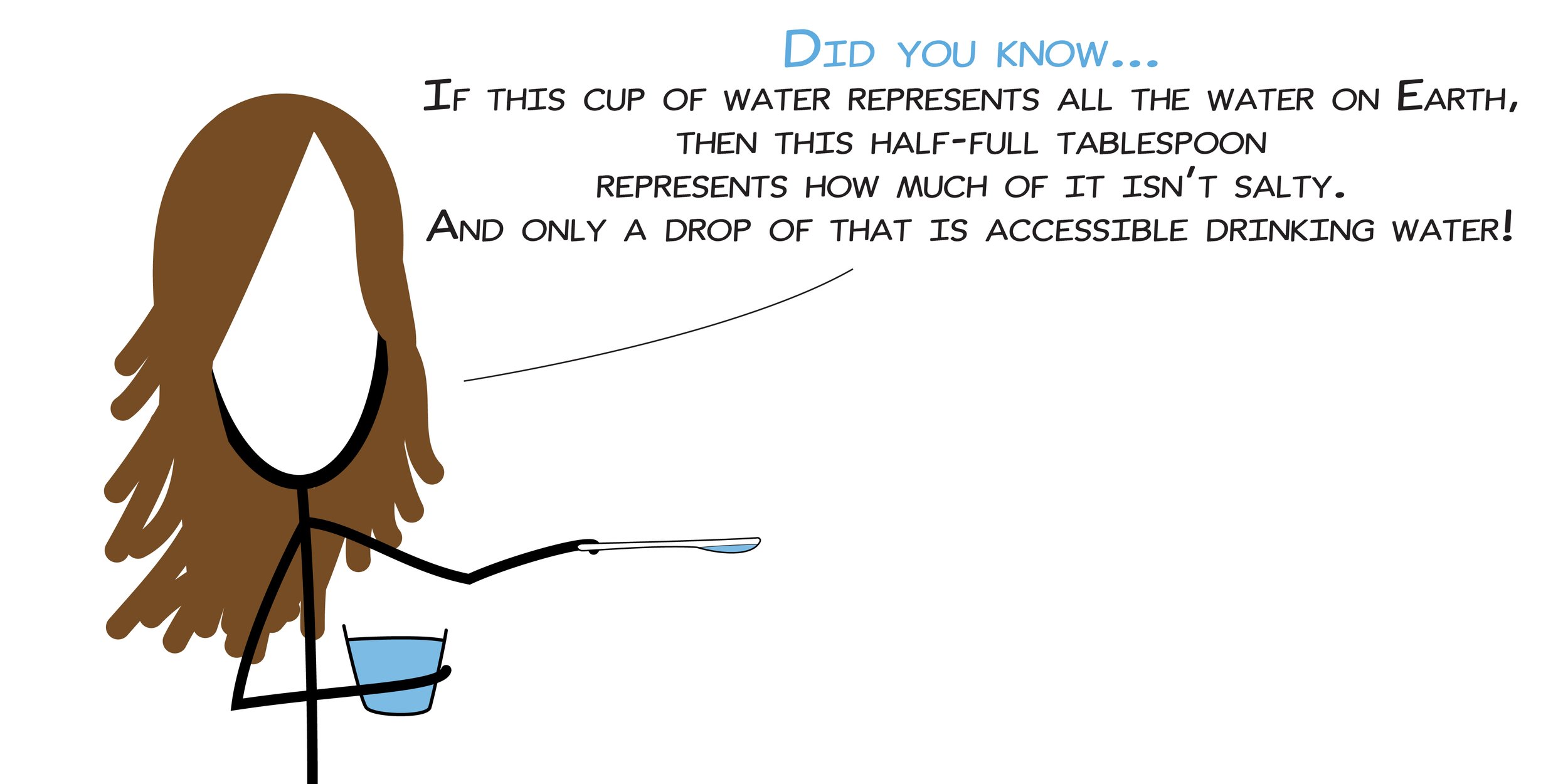
As far as we know, water is the real stuff of life. It is the one thing that all life on this planet needs, so much so that scientists believe that the best place to look for extraterrestrial life is on other worlds with water. But what is it about water that brings life to our planet? By exploring the solubility of various chemicals in water, we will discover why it is the “universal solvent”, and one that is particularly great at dissolving the chemicals we depend on. Then, once dissolved, we will see how water allows these chemicals to take part in the chemistry of life, just as it allows us to react up expanding balloons of gas and liquids that change colour at will!

RAMPANT REACTIONS

For a chemical to take away electrons, another one has to be willing to give them up. And to lose electrons, we need a chemical to accept them. So most reactions are really a mixture of reduction & oxidation, and these redox reactions can be downright magical. By carefully adjusting the recipe for the Iodine Clock reaction to control the rate of redox, our chemists will concoct a clear potion that will turn pitch black on their command!